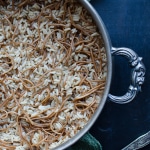
Rice Pilaf
Servings 4
Ingredients
- 3 tablespoons butter
- 1/2 cup uncooked fine egg noodles
- 1 cup long grain white rice see Notes
- 2 1/8 cups chicken broth or vegetable broth
- salt to taste
Instructions
- Melt the butter in a medium heavy saucepan over medium-high heat. As soon as the butter has melted, add the uncooked egg noodles. Stir continuously to coat all of the noodles with butter and to keep the noodles constantly moving to prevent burning them. Reduce the heat just a bit while continuing to brown the noodles. The goal is to get them as brown as possible without burning. Once the noodles are almost where you want them, reduce the heat to medium and allow them and the butter to continue to slowly get toasted.
- Add the rice to the pot and stir to coat each grain. Continue to toast the rice and noodles for another minute or two. Be sure to keep an eye on your heat. If medium seems too high, reduce the heat further.
- Add the broth, give the pot a quick stir and cover immediately. Raise the heat to high and bring the broth to a boil. As soon as it boils, reduce the heat to low and simmer for 20 minutes without uncovering.
- After 20 minutes, without uncovering the pot, remove from the heat and allow the rice to sit for five minutes.
- If you’d like to get a golden crust of crisp rice at the bottom, after the 20 minutes of simmering, raise the heat to medium. Stay close by and allow the rice to continue cooking for about 5 minutes. You’ll hear a bit of crackling. Remove from the heat and allow the rice to sit for five minutes.
- Just before serving, fluff with a fork.
Notes
Traditionally, this pilaf is made with long grain white rice. Brown rice is certainly better nutritionally and I do prepare this with brown rice a lot. Just refer to the cooking time for the variety of brown rice you choose.
Be sure to have all of your ingredients measured and in place when preparing this pilaf. Browning the butter and egg noodles goes quickly and can go from perfectly brown to burnt very quickly. Keep a constant eye on the pot during that step.
Don’t be tempted to uncover the lid or to stir the pot while simmering.